
How to Search Webb County Court Records
Most Webb County court records start at one online tool. The county links a "Public Record Search" from its homepage and clerk pages, and that link goes to the Odyssey Public Access portal at publicaccess.webbcountytx.gov. The landing page lets you pick a record category first: Criminal Records, Probate Case Records, Family Case Records, Civil Case Records, or Court Calendar. Pick the one that fits your case, then search by the best clue you have. A case number works best. A party name works too.
Have your details ready before you start. A correct name spelling, a case number, or a filing year all help cut down the results. If a case does not show up online, that does not always mean it is gone. Older, sealed, juvenile, or expunged matters may not appear, and federal or city cases live in other systems.
- Open the Webb County Public Record Search at publicaccess.webbcountytx.gov.
- Choose a category: Criminal, Probate, Family, Civil, or Court Calendar.
- Enter a case number, or search by last and first name.
- Open a match and note the court, case type, parties, and status.
- For a certified copy, order it from the District Clerk or County Clerk that holds the file.
The county homepage is the safest place to begin, since it links every official search tool in one spot. The screenshot below shows that homepage and its court, clerk, and search menus.
Take a look at the official Webb County homepage to see how the navigation is laid out.
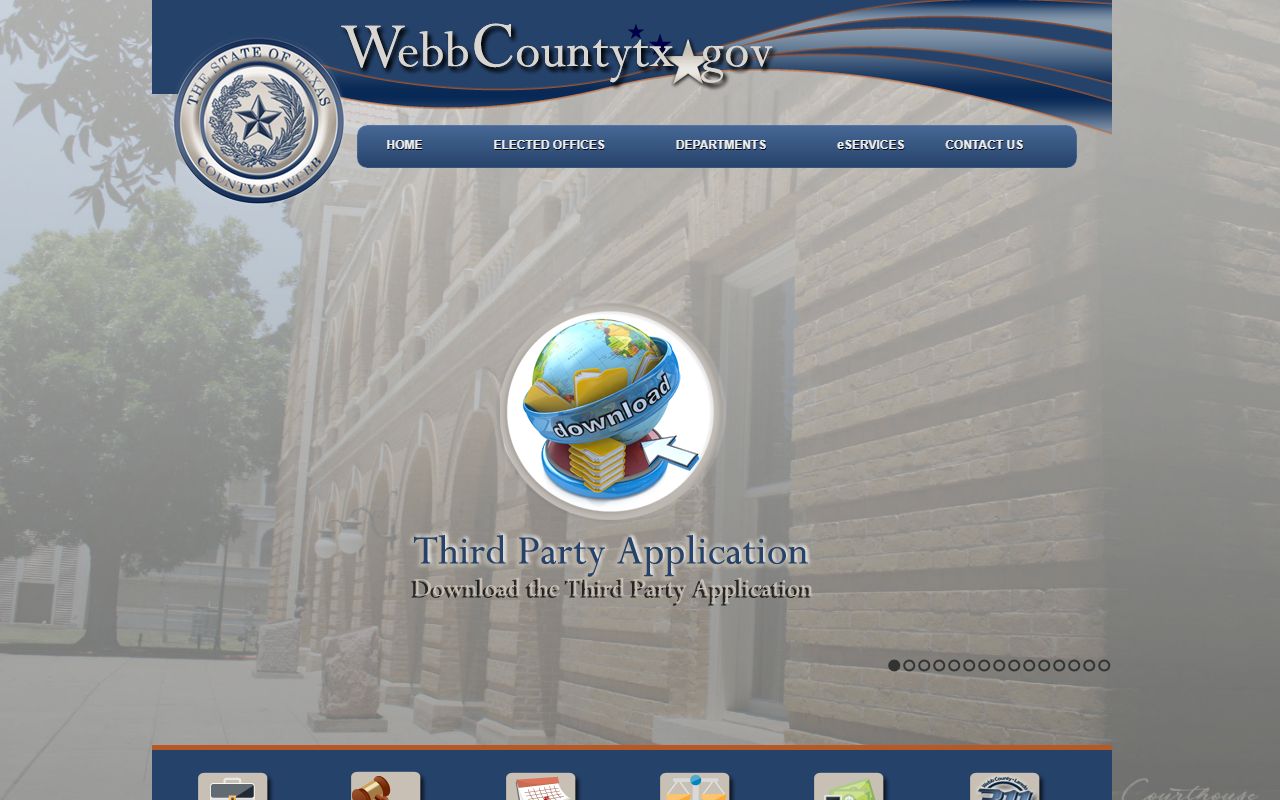
From that page you can reach the public record search, the County Clerk, the District Clerk, the sheriff, and the jail and bond search without leaving the official site.
The Webb County Judicial System
Texas uses a layered court system, and Webb County sits inside it. At the top are two statewide courts of last resort. The Texas Supreme Court is the final word on civil and juvenile matters. The Texas Court of Criminal Appeals is the final word on criminal matters. Below them, the intermediate Texas Courts of Appeals hear most appeals from trial courts. Webb County's trial work happens in district courts, county courts at law, justice courts, and the Laredo Municipal Court.
The district courts carry the broadest load. Webb County lists the 49th, 111th, 341st, and 406th District Courts. These courts hear felony cases, large civil suits, and family matters. County Court at Law I and County Court at Law II handle civil, family, and probate work, plus some criminal cases. Justice of the Peace courts take small claims, evictions, traffic, and Class C misdemeanors.
Case flow: Justice Court › County Court at Law › District Court › Court of Appeals
| Court | Level | Case Types |
|---|---|---|
| District Courts (49th, 111th, 341st, 406th) | General trial | Felonies, major civil suits, family, juvenile |
| County Courts at Law I & II | County trial | Civil, family, probate, some criminal |
| Justice of the Peace Courts | Lower trial | Small claims, evictions, traffic, Class C |
| Texas Courts of Appeals | Intermediate appeals | Civil and criminal appeals |
| Texas Supreme Court / Court of Criminal Appeals | Highest courts | Final civil / final criminal |
The Texas Judiciary explains this hierarchy in plain terms. The image below comes from the state trial-courts overview.
For the statewide view, see the Texas Judiciary trial-courts page.
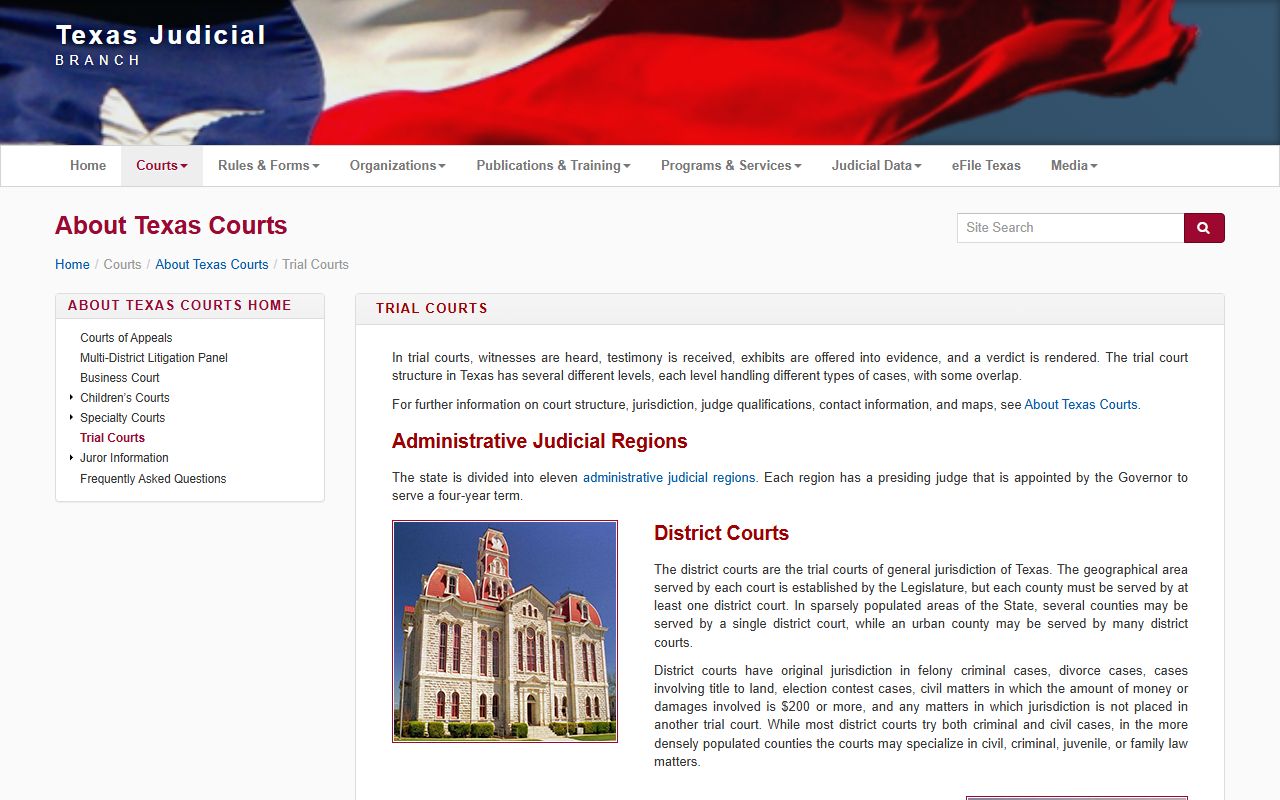
That page describes how district, county, justice, and municipal courts split the work, which mirrors how Webb County assigns its own cases.
Webb County Courthouses
Most court-record offices share one building in downtown Laredo. The 406th District Court calls it the Dean Senator Judith Zaffirini Justice Center at 1110 Victoria Street. The County Clerk, District Clerk, district courts, county courts at law, and the Precinct 1 justice courts all keep offices there by suite. The county also runs a historic courthouse and administration building a few blocks away on Houston Street, and the sheriff and jail sit nearby.
Dean Senator Judith Zaffirini Justice Center
1110 Victoria Street
Laredo, TX 78040
(956) 523-4268
Webb County Administration Building
1000 Houston Street
Laredo, TX 78040
(956) 523-4600
Types of Court Records in Webb County
Webb County keeps several kinds of court records, split by the court that handles the case. District courts produce felony criminal files, large civil suits, and family cases. County courts at law cover civil, family, and probate matters. Justice courts hold small claims, evictions, and traffic cases. Knowing the case type points you to the right court and the right clerk.
Each record type has its own home. Criminal and civil district-court files run through the District Clerk. Probate, marriage, and property records run through the County Clerk. Traffic and small claims sit with the justice courts.
- Criminal records - felony indictments, judgments, and case files from the district courts.
- Civil records - lawsuits, debt claims, judgments, and writs.
- Family and divorce records - divorce, custody, child support, and paternity cases.
- Probate records - wills, estate administration, and guardianship files.
- Traffic records - citations and Class C cases from the justice and municipal courts.
The Texas Judiciary lists seven trial-court types statewide, which helps explain why Webb County records are spread across so many offices. The juror-basics page below sets that out.
See the Texas Judiciary juror basics page for the full list of trial courts.
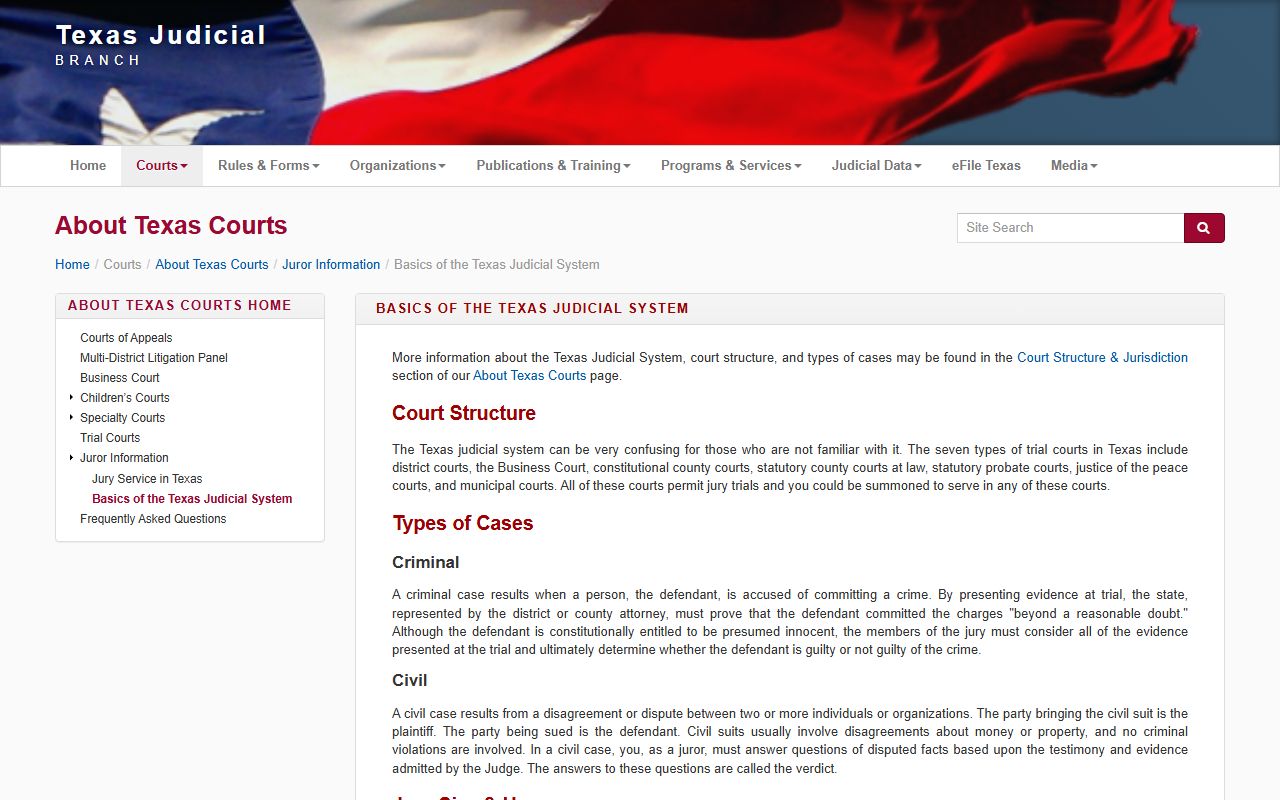
That breakdown is why a single search rarely covers everything. A full Webb County court record check often means looking in more than one place.
What Webb County Court Records Show
A case record is more than a name and a date. Webb County files in the Odyssey portal tend to list the court, the case type, the parties, the filing date, and the status. Criminal cases add the charge and any disposition. Civil cases add the claim and the judgment. Some fields are blocked or redacted by law, such as Social Security numbers, driver license numbers, and details about minors.
| Field | What It Shows |
|---|---|
| Case Number | The court's unique ID for the case, often a year plus a type code and sequence. |
| Court | Which court holds the case, such as the 49th District Court or County Court at Law I. |
| Filing Date | The date the case opened with the clerk. |
| Parties | Plaintiff and defendant, or petitioner and respondent, with their roles. |
| Charges / Cause | The criminal charge or the civil claim driving the case. |
| Disposition | The outcome, such as dismissed, guilty plea, judgment, or pending. |
Note: A docket may show the case exists without showing every filed document, and certified copies still come from the clerk who holds the file.
Public Access Laws for Webb County Court Records
Texas treats court records and ordinary government records a little differently. The Public Information Act sets a strong policy of open access to government affairs, but court records are handled through court rules and the clerks rather than a standard open-records request. That is why a Webb County requester usually goes to the District Clerk, the County Clerk, or the Odyssey portal for case files. Confidential categories, like juvenile and adoption matters, stay restricted no matter the path.
Key Statutes:
Texas Government Code Chapter 552 - the Public Information Act sets the public right to government records, with listed exceptions.
Texas Government Code § 552.0035 - judiciary records are reached through court rules and clerks, not a standard open-records request.
Texas Code of Criminal Procedure Chapter 55 - sets when eligible arrest and case records can be expunged.
Texas Government Code Chapter 411 - governs how state criminal history record information is shared.
The Texas Judiciary's overview page is a good plain-language starting point for how these rules fit together.
Browse the Texas Judiciary About Texas Courts page for context on court-record access.
It frames how the trial and appellate courts share work, which shapes who keeps each Webb County record.
Records That Are Restricted or Confidential
Not every case is open to the public. Juvenile records are restricted under the Texas Family Code. Adoption files are confidential. Expunged records are destroyed or sealed and should not appear in a public search at all. Records under an order of nondisclosure are kept from public release while still reaching some criminal-justice and licensing users. Sealed civil records, mental health files, and CPS investigation files also carry tight limits.
If you think a record is sealed or expunged, a blank search result is not proof either way. The clerk, an attorney, or a court order is the right route. The Webb County District Clerk even publishes an expunction agency list so people know which offices to name in an expunction order. To view a sealed file, a person usually has to petition the court that holds it and meet the legal standard for access.
Specialty Courts in Webb County
Webb County runs several specialty programs that go beyond a normal docket. The 406th District Court hosts a Drug Court Program, a judge-supervised treatment track for adults facing certain drug charges. Its Veterans Treatment Program is voluntary, runs about 12 to 18 months in three phases, and carries a $500 program fee that participants can offset with weekly incentives. County Court at Law II lists a DWI Court Program and a Juvenile Drug Court Program.
Two more programs stand out. The 111th District Court judge piloted a Mental Health Court to serve people whose cases tie back to mental illness. The 406th District Court also helped launch a Social Justice Night Court, a joint effort with the local bar and Texas RioGrande Legal Aid that gives free help to low-income residents on uncontested matters. Judges from all four district courts rotate through it.
Webb County Sheriff and Jail
The Webb County Sheriff runs the county jail and books people after arrest. The Webb County Jail held 372 people on the first day of its December 2023 PREA audit, with 203 staff on site. The sheriff's page links a Webb County Jail Inmate and Bond Search, which is an Odyssey jail-records tool. The current sheriff, Martin Cuellar, and an assistant chief appeared in federal court in January 2026 on an indictment alleging misuse of office funds; those are allegations, not a conviction.
For the full roster and how to look someone up, see Webb County inmate records. For active orders to arrest, see warrant records. To track a custody change, see released inmates.
Marriage, Divorce, and Probate Records
The County Clerk issues marriage licenses and handles marriage record searches, while divorces move through the district and county-court structure and the District Clerk's case files. Probate runs through the County Clerk and the county courts at law. For the full process, see marriage and divorce records and probate records.
- Testator
- The person who makes a will and whose estate is handled in probate.
- Executor
- The person named in a will to carry out its terms and settle the estate.
- Guardianship
- Court-ordered authority over a minor or an incapacitated adult and their affairs.
Webb County Court Records Fees
Fees depend on the office and the kind of copy you need. The District Clerk charges for written record searches and for copies of case documents. The County Clerk sets fees for marriage records and for recording property documents. Plan to pay by check, money order, or cashier's check for mailed requests, and confirm the current amount before you send payment because schedules change.
| Item | Amount |
|---|---|
| District Clerk record search (per party) | $5 |
| Copy of a case instrument (per page) | $1 |
| Marriage license issuance | $81 |
| Marriage record search / first certified copy | $21 |
| Property record recording (first page) | $25 |
For the full breakdown by office, the District Clerk and County Clerk pages list services and current charges.
How to Read a Webb County Court Record
Court files use shorthand. A charge is not the same as a conviction. A charge is what the state accuses a person of, while a conviction is a formal finding or plea of guilt. A disposition is the outcome of a charge or case. "Deferred adjudication" means the court holds off on a guilty finding while a person completes supervision, and a clean finish can avoid a conviction. "Dismissed with prejudice" bars a refiling; "without prejudice" may allow one. When a record is unclear, the clerk can confirm the case status.
Accuracy and Record Limitations
Online records can lag behind the paper file. A new case may not show up for a few days, and a recent ruling may post later than it was signed. Spelling, shared names, and split record systems all cause misses. The county portal is a strong starting point, not the last word.
Note: Confirm any case detail with the clerk or court that holds the file before you rely on it for a legal, financial, or personal decision.
History of Webb County Courts
Webb County's courts grew over time. The 49th District Court was the first court of the county and still carries the broadest jurisdiction, including civil, criminal, and tax suits. The 111th came next. The 341st District Court was created in August 1983. County Court at Law No. 1 opened on September 1, 1975 for civil and family work such as divorce and paternity. The 406th District Court began operations in January 2001, built to give preference to domestic-violence and family cases, and later took on protective orders.
For population and demographic context behind that caseload, the U.S. Census QuickFacts page is a useful reference. The image below shows that profile.
See the U.S. Census QuickFacts for Webb County for population data.
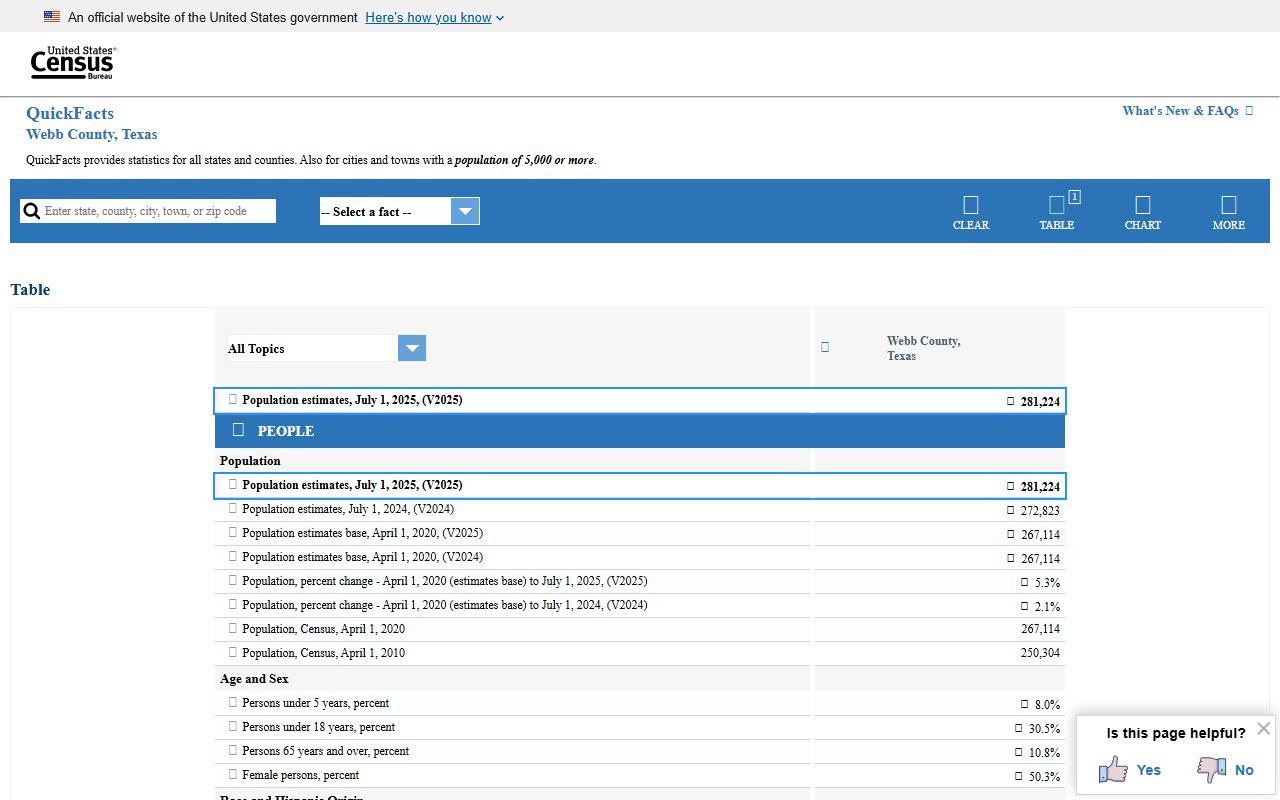
The county's size and its place on the border help explain its bilingual courts and its busy family and criminal dockets.
Frequently Asked Questions
How do I search Webb County court records online?
Use the official Webb County Public Record Search at publicaccess.webbcountytx.gov. The landing page shows Criminal, Probate, Family, Civil, and Court Calendar categories. Choose the one that matches your case, then search by case number or party name. If the record does not show up, the District Clerk or County Clerk can help, since older or restricted records may not display online.
Which clerk handles which records?
The District Clerk keeps district-court civil, family, and criminal files. The County Clerk keeps marriage licenses, probate, property, and county-level records. If you are not sure which office holds your case, the case type usually tells you. A felony or divorce points to the District Clerk; a will or marriage license points to the County Clerk.
Are Webb County court records public?
Many adult civil, criminal, probate, and family docket records are public, but not all of them appear online or to every requester. Juvenile, adoption, sealed, expunged, and nondisclosed records are restricted, and personal data like Social Security numbers is redacted. Court records also follow court rules rather than the standard open-records process.
More on the Webb County Court Records FAQ page.