
What Probate Covers in Webb County
Probate is the court process for handling a person's estate after death or for setting up a guardianship over a minor or an incapacitated adult. In Webb County, the County Clerk maintains probate case records, and the county courts at law hear probate matters. County Court at Law I lists Fernando Lozano as the Probate Court Coordinator at 956-523-4343, which signals that probate is run through the county court-at-law structure rather than a separate probate-only court.
Probate files include wills, applications to probate a will, applications for administration, orders admitting wills, letters testamentary, inventories, heirship pleadings, and guardianship papers. Many estate dockets are public at the index level, but exhibits and ward files can include sensitive information that is restricted.
Probate Terms Defined
Probate uses its own words. The list below covers the most common Webb County probate terms so the case file reads more clearly.
- Testator
- A person who makes a will and whose estate is handled in probate.
- Executor
- The person named in a will to carry out its terms and settle the estate.
- Administrator
- A person appointed by the court to handle an estate when there is no will or no available executor.
- Letters testamentary
- The court document that authorizes an executor to act for the estate.
- Intestate
- Dying without a valid will, which triggers state distribution rules.
- Guardianship
- Court-supervised authority over a minor or an incapacitated adult.
How to Search Webb County Probate Records
Use the Webb County Odyssey Public Access portal and pick Probate Case Records from the location dropdown. Search by case number when you have one, or by the decedent's, applicant's, or ward's name. The system covers the same case index the courts use, so a result there reflects a real file on record with the County Clerk and the county court at law.
| Field Label | Type | Required | Notes |
|---|---|---|---|
| Select a location | Dropdown | Yes | Choose Probate Case Records. |
| Case number | Text | No | Best when known. |
| Party / decedent / applicant name | Text | No | Verify the label on the live form. |
| Filing / date range | Date | No | Some Odyssey tabs add a date filter. |
If the file is older or not online, the County Clerk holds the certified copies and the original paper record. The image below shows the County Court at Law I page that ties probate to the court-at-law structure.
See the Webb County Court at Law I page, which lists the probate coordinator.
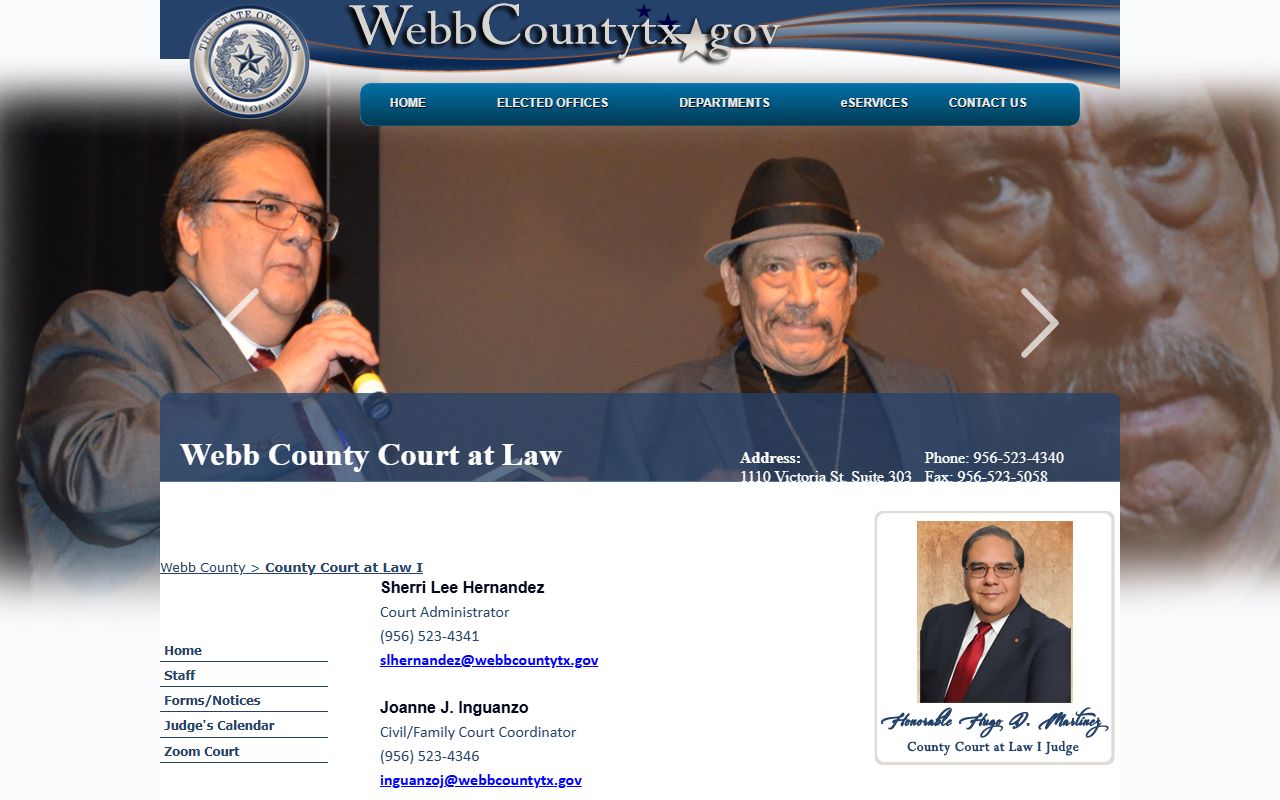
That coordinator and the County Clerk are the two contacts to know when a Webb County probate question gets specific.
Probate Courts and Contacts in Webb County
Webb County does not run a stand-alone probate court. Probate cases route through the county courts at law, and the County Clerk keeps the records. The cards below give the offices most often involved in a probate matter.
County Court at Law I
1110 Victoria Street, Suite 303
Laredo, TX 78040
(956) 523-4340
Probate coordinator: Fernando Lozano
County Court at Law II
1110 Victoria Street, Suite 404
Laredo, TX 78040
(956) 523-4332
Probate Filing Fees
Probate fees come out of the County Clerk's court fee schedule. The full table changes from year to year and is published as a PDF that the clerk updates, so confirm any current charge before mailing. The published schedule includes a probate transfer-from-another-county fee. Use the County Clerk for the latest amount on probate applications, letters, certified copies, and recording.
| Item | Amount |
|---|---|
| Probate transfer from another county | $360 |
| Probate application, letters, and other items | See County Clerk court fee schedule |
| Plain copy / certified copy | Per current fee schedule |
Note: The County Clerk's posted schedule states fees are subject to change, so verify the current amount before filing.
What Webb County Probate Records Show
A probate file holds the documents that move an estate from death to closure. Expect to see the application to probate a will or for administration, the will and any codicils, proof of death and other proof of facts, the order admitting the will, letters testamentary or letters of administration, an inventory and appraisement, heirship pleadings, notices to creditors, annual or final accountings, and orders closing the estate. Smaller estates may use a small estate affidavit instead of full administration under Texas Estates Code Chapter 205.
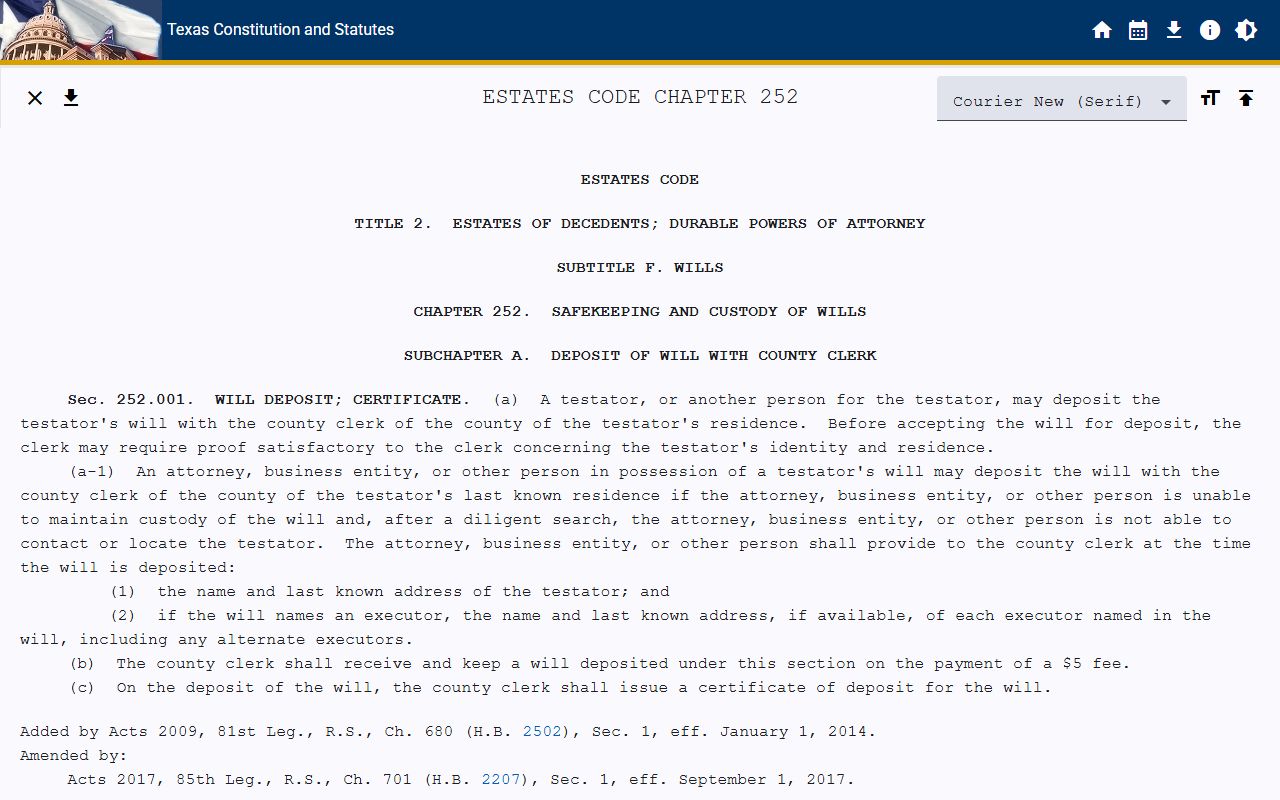
For wills filed for safekeeping with a county clerk in some circumstances, see Texas Estates Code Chapter 252. The image below shows that chapter on the state statutes site.
For estates that qualify, the small estate affidavit can move things along without full administration. The image below shows that chapter.
Review Texas Estates Code Chapter 205 for small estate affidavit rules.
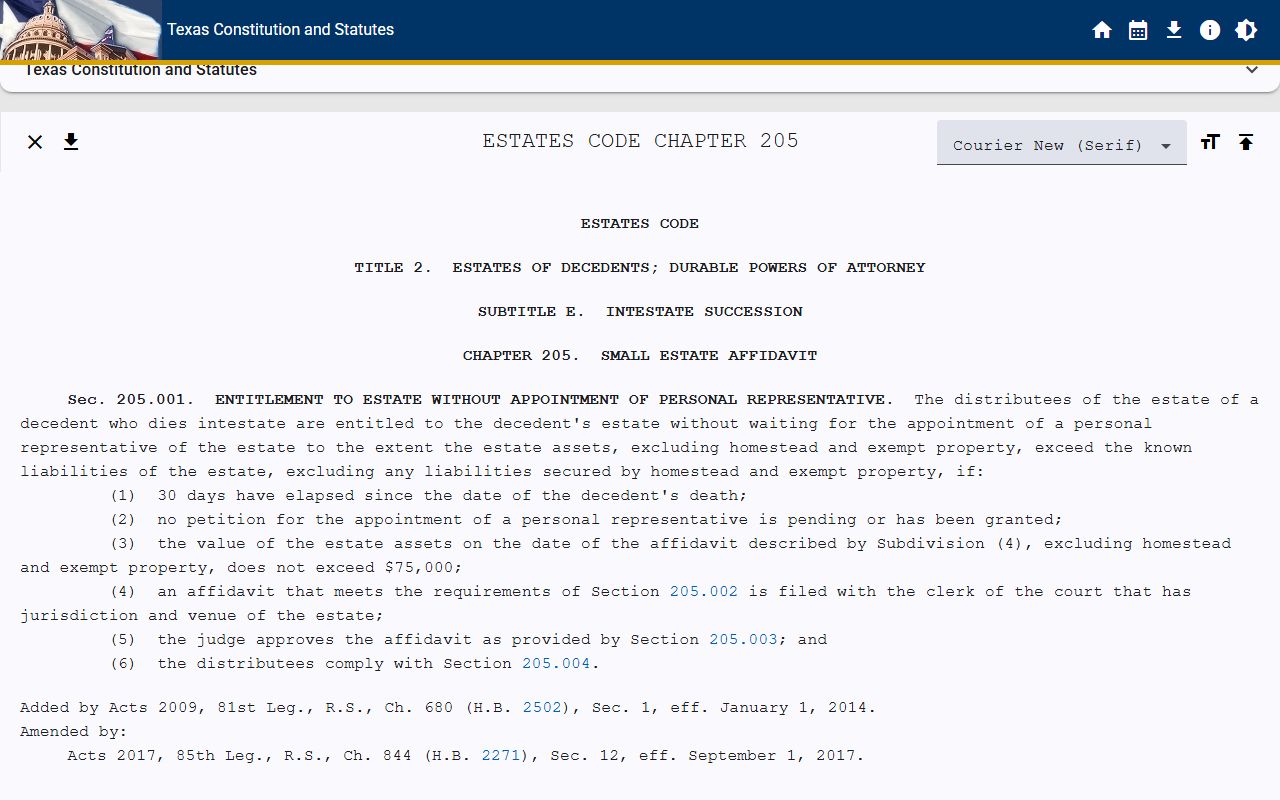
Confirm with the County Clerk whether the estate meets the statute's requirements before filing.
Bankruptcy Is Not County Probate
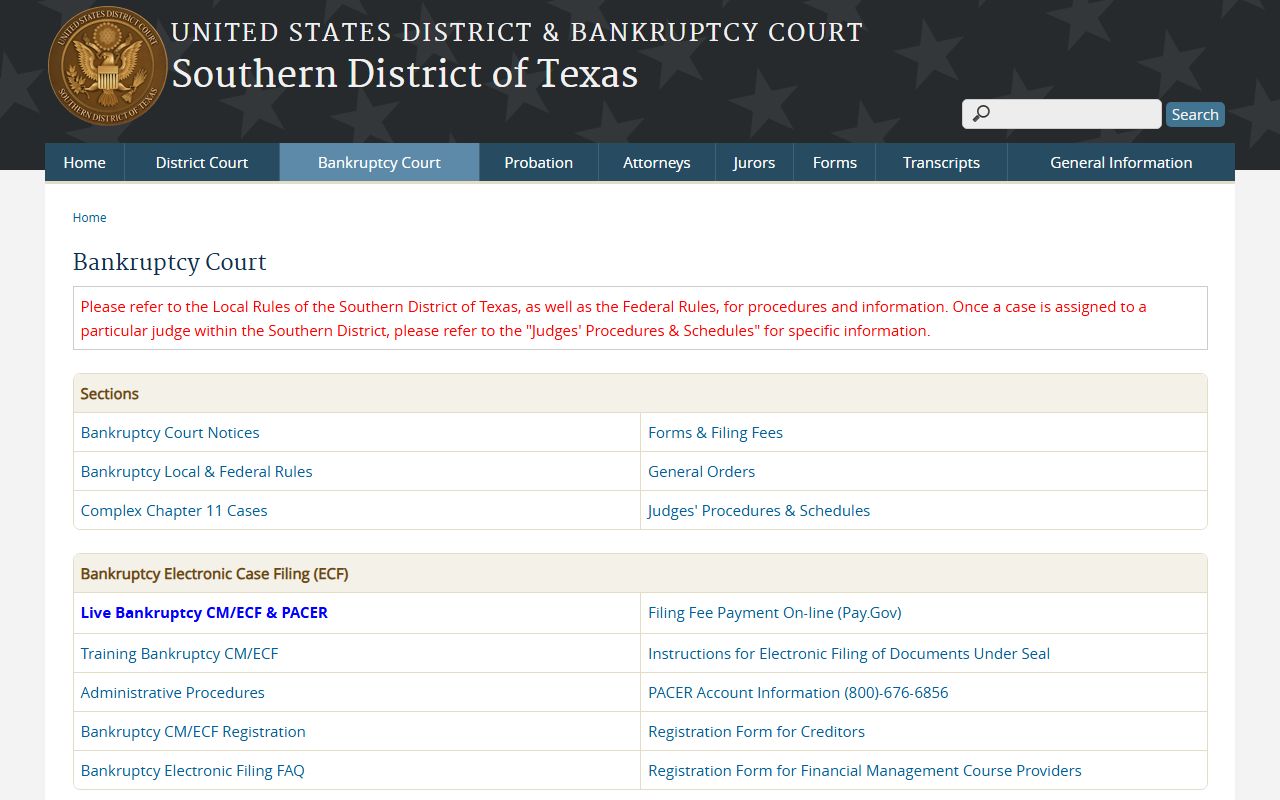
People sometimes mix probate with bankruptcy because both involve debts and assets, but they are different. Probate is a state court process that runs through Webb County. Bankruptcy is a federal court process for the Southern District of Texas. A federal bankruptcy file is not in the county Odyssey portal, the County Clerk, or the District Clerk. The image below shows the federal bankruptcy reference.
See the U.S. Bankruptcy Court for the Southern District of Texas for federal bankruptcy matters.
If a person's estate has both probate and bankruptcy issues, each system handles its own piece, and a lawyer can sort out which filing comes first.
Restricted Probate Records
Most routine probate dockets are public, but exhibits can carry restrictions. Bank statements, financial account numbers, medical records, minor and ward information, and protected addresses may be redacted under state confidentiality rules. Guardianship of an incapacitated adult or a minor's estate often involves medical and capacity evidence, annual reports, and accountings that include sensitive financial information. A judge can also order that certain materials be sealed in a specific case.
The County Clerk's 2025 notice on property record redactions also reaches some probate filings. House Bill 4350 from the 89th Texas Legislature lets eligible individuals, including peace officers, judges, and other protected persons, request written redactions of personal information from publicly available records. That tool can apply when a probate filing contains protected addresses or other identifying data of an eligible person.